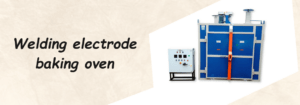



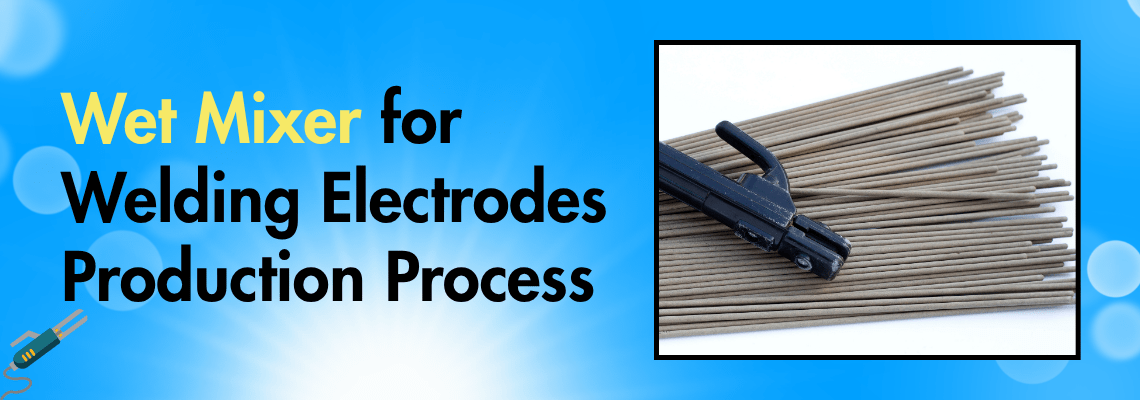
Making welding electrodes is a very complex, multi-step engineering process that turns raw steel wire and chemical powders into completed, coated goods. Wire Processing is the first step in the production cycle. During this step, high-quality steel is drawn to the exact diameter, straightened, and cut into standard lengths. At the same time, Flux Preparation takes place. This means mixing different minerals and metals (Dry Mixing) and then adding a liquid binder to make a smooth paste (Wet Mixing). Welding electrodes must go through extensive quality inspections throughout these early phases to make sure that the final product fulfils worldwide performance standards. Extrusion is the main part of the procedure. This is when the paste is put on the core wires under a lot of hydraulic pressure. Finally, the electrodes go through a process called “Finishing,” which includes cleaning the tips for conductivity, printing the brand name, and baking them in a controlled way to make sure the coating is strong and free of moisture.
How to Use a Wet Mixer in Electrode Production
The Wet Mixer plays a critical role in the flux preparation stage. First, the dry chemical powders are blended to the required composition, and then they are transferred to the Wet Mixer. Here, the loose powder is converted into a smooth, high-quality coating paste.
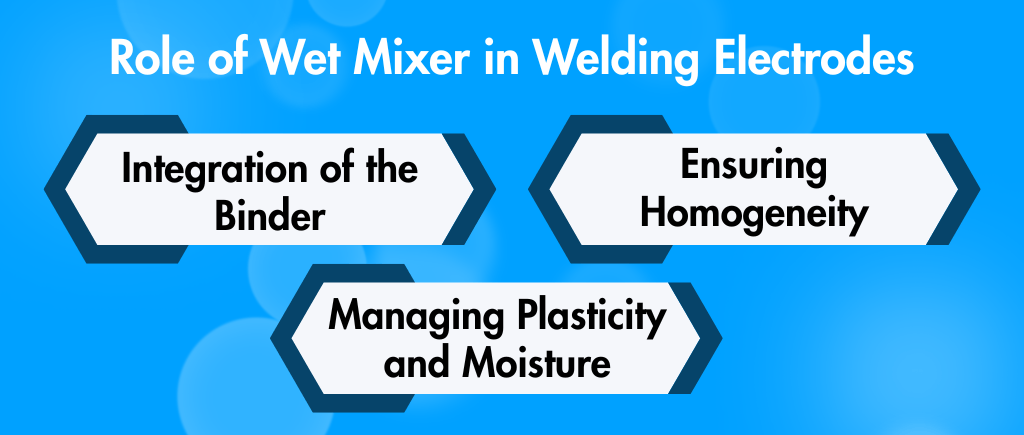
1.Integration of the Binder
- Uniform Coating: At this stage, a liquid bindertypically sodium or potassium silicateis introduced. The Wet Mixer ensures that each particle of the dry mix is evenly covered, resulting in a thick, workable paste.
- Optimized Absorption: The mixer is designed to allow the binder to penetrate deeply into the dry minerals. This helps maintain consistent chemical properties in the flux and prevents the binder from settling at the bottom of the mixture.
-
Ensuring Homogeneity
- Mechanical Kneading: The mixer uses high-torque blades to knead the material, breaking down lumps and creating a smooth, uniform paste. If the mixture is not consistent, it can affect the coating performance during application.
- Removal of Air Pockets: Continuous high-torque mixing helps eliminate trapped air within the paste. This is essential because air bubbles in the flux can lead to defects like pockmarks or small holes in the electrode coating during the final baking stage.
-
Managing Plasticity and Moisture
- Resistance to Pressure: The mixer allows operators to control the plasticity of the paste. A properly mixed batch ensures that the cylindrical slugs can withstand high-pressure extrusion (typically over 100 tons) without separating from the wire core.
- Evaporation Control: To prevent the silicate binder from drying too quickly, many modern wet mixers are sealed or equipped with temperature control systems. Maintaining the right moisture level keeps the paste workable for a longer time and helps reduce material waste during production.
The precision of the flux preparation stage is what ultimately determines the quality of a finished welding rod. As we have explored, the Wet Mixer for Welding Electrodes Production Process is the critical link between raw chemical powders and a high-performance coating. By ensuring uniform binder integration, eliminating air pockets, and maintaining the perfect level of plasticity, a high-quality wet mixer minimizes material waste and prevents defects during high-pressure extrusion.
In the competitive world of industrial manufacturing, the reliability of your equipment is your greatest asset. At Logos Weld, we provide state-of-the-art machinery designed to handle the most demanding production requirements with ease. Our advanced wet mixer solutions are engineered for durability and precision, ensuring that your production line consistently meets international standards for electrode excellence.