


Pipeline welding forms the backbone of industries like oil and gas, power generation, shipbuilding, and construction. Every pipeline that carries fuel, water, or chemicals depends on strong, leak-proof joints. the difference between a system that lasts decades and one that fails under pressure. Before diving into automation, it helps to understand the two traditional methods that shaped this field.
Arc Welding Fundamentals:
Arc welding uses an electric current to generate heat between an electrode and the pipe surface, melting the metal to form a fused joint. It’s valued for deep penetration, strong joints, and adaptability across pipe thicknesses making it a go-to choose for structural and high-pressure applications.
Gas Welding Basics:
Gas welding, on the other hand, relies on a fuel gas mixed with oxygen to produce a flame that melts the base metal. It offers more control at lower temperatures, which makes it suitable for thinner pipes and precision repair work, though it’s generally slower than arc-based methods. Understanding these fundamentals sets the stage for where automation comes in and why it’s transforming industrial pipe fabrication.
The Push Behind Automation in Pipe Welding:
Manual welding, however skilled, carries natural variability. Fatigue, inconsistent hand movement, and environmental conditions can all affect weld quality. Industrial production demands repeatability at scale hundreds or thousands of identical joints without compromise. This need for consistency, combined with rising labour costs and safety concerns around fumes and heat exposure, is what drives manufacturers toward automated systems.
The Mechanics of an Automated Welding Setup:
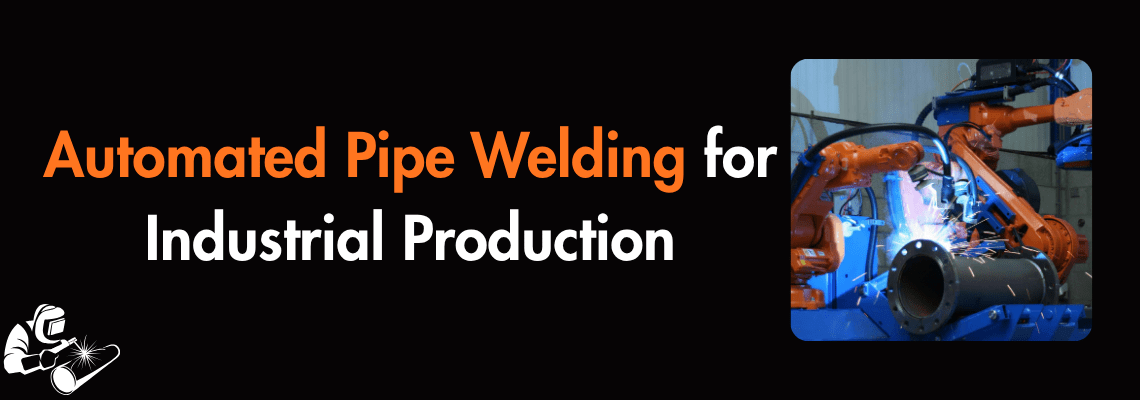
Automated pipe welding systems typically combine a few core components:
• Orbital welding heads that rotate precisely around the pipe circumference
- Programmable logic controllers (PLCs) that manage current, speed, and torch angle
- Sensors and cameras for real-time seam tracking and defect detection
- Robotic arms or fixed-position welders depending on the pipe
Operators program weld parameters once travel speed, voltage, wire feed and the system replicate that exact profile across every joint, whether it’s the first pipe or the thousandth.
Manufacturers Gain from This Shift
• Consistency at scale: Every weld follows the same programmed parameters
• Reduced human error: No fatigue-related dips in quality during long shifts
• Faster turnaround: Continuous operation without frequent manual breaks
• Improved safety: Operators are positioned away from arc flash, fumes, and heat
• Lower long-term costs: Fewer reworks and material waste over time on this approach. Cross-country pipelines transporting oil and gas use orbital automated welding to maintain uniform joint strength across thousands of kilo meters.
Power plants use it for boiler tube fabrication, where even minor inconsistencies can affect performance under extreme heat and pressure. Shipbuilders apply it to piping systems where space is tight and manual access is limited.
Companies like Logosweld bring years of hands-on fabrication experience to help manufacturers evaluate which approach fits their specific pipeline demands. With deep technical expertise in welding equipment and a track record trusted across industrial projects, Logosweld supports production teams in adopting automated pipe welding solutions that improve consistency, safety, and output without losing sight of the craftsmanship that quality welding still requires.