


Manufacturing welding electrodes is a complex multi stage process which starts with the combination of raw materials which includes basic metals and minerals to create a consumable that reliably strikes an arc and produces a strong weld joint. Every welding electrode consists of a core wire and a defining outer layer, both of which wholly depend on the choice of raw materials. For a manufacturer, making the right choice of raw materials is more than just a technical decision; it determines the performance of the electrode, consistency of the arc, and the strength of the final weld.
Raw Materials Used in Electrode Manufacturing
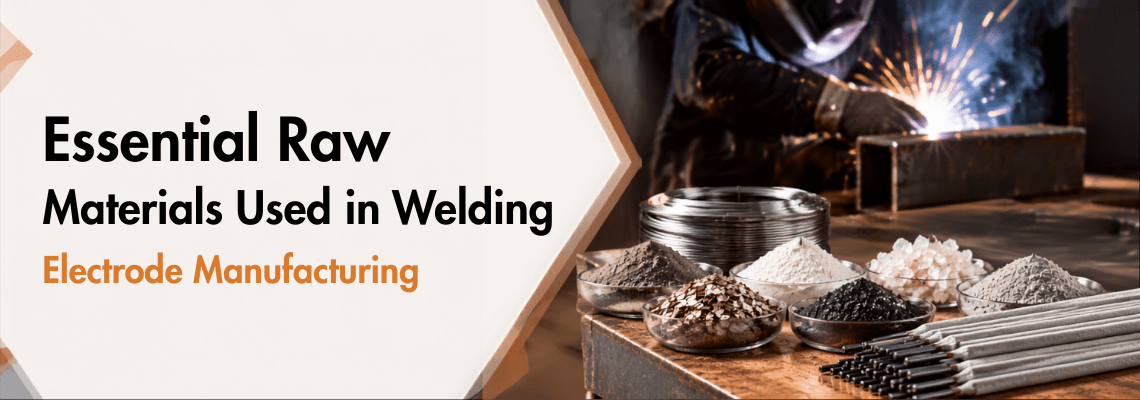
In the context of electrode production, raw materials are the metals and minerals which are used to form the core wire and the flux coating respectively. For the majority of cases these materials are of the following types:
Core Wire Material – low carbon steel wire rod
Mineral and Flux Ingredients – rutile, calcium carbonate, fluorspar, silica, mica
Binding and Alloying Agents – sodium or potassium silicate binders, ferro-alloys, and iron powder
Each of these materials has a distinctive role and the exact formulation also depends on the type of electrode being manufactured and the kind of welding which it is being used for.
Process and Purpose of Manufacturing
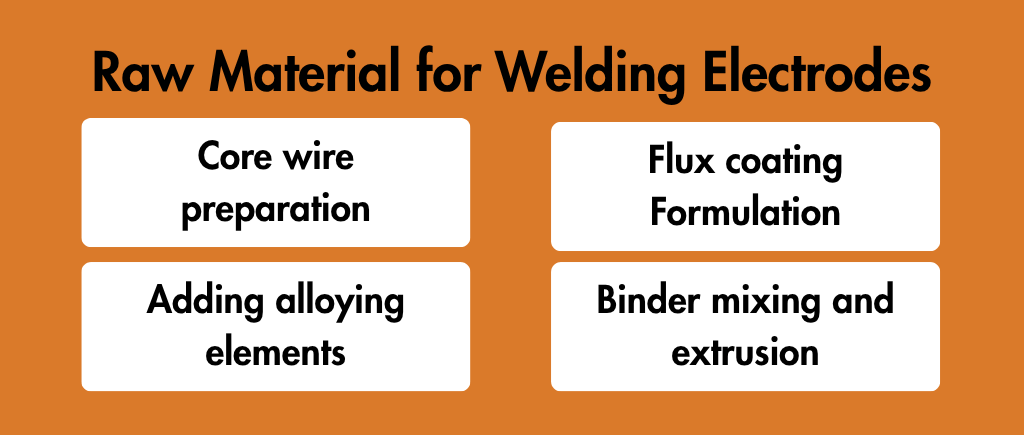
- Core Wire Preparation
Core wire used in the manufacturing process needs to be chemically pure since it will carry the welding current and later form part of the weld deposit. Steel wire rod is drawn and cut into standard electrode lengths.
- Flux Coating Formulation
The flux coating is formulated using rutile (titanium dioxide) and calcium carbonate. The combination is used to control slag formation as well as improves the stability of the arc interval and the appearance of the beads. Fluorspar is used to improve the slag’s flowing ability, while silica and mica improve the binding ability of the mixture and facilitate smooth extrusion of the mixture onto the wire.
- Adding Alloying Elements
Alloying elements are introduced to the flux mixture in order to control mechanical properties of the final weld of the steel such as strength, ductility, and resistance to cracking. In some cases, the mixture is used to improve the efficiency of deposition.
- Binder Mixing and Extrusion
A fluid binder, potassium or sodium silicate, is used to improve the adhesion of the flux mixture to the rod, and once the mixture is prepared the coating is extruded in close even planes of the rod.
- Drying and Baking
The purpose of drying and baking the coated electrodes is to eliminate the moisture from the coating while ensuring it will not crack and flake off during storage and welding.
The Importance of High Quality Raw Materials
Raw materials with poor mineral quality cause instabilities in the arc with excessive spatter.
Inadequate binder quality causes moisture absorption and cracking in the coating.
Inappropriate ratios of ferro alloys compromise the mechanical properties of the final weld.
Substandard core wire affects the voltage carrying capacity and the consistency of the weld.
This is the reason reputable manufacturers test and source these materials carefully even before they reach the extrusion line.
Conclusion
From core wire to the mineral-rich flux, the selection of raw materials for welding electrodes influences the electrode’s performance in the field the most. The production ratios and processing conditions of a given manufacturer determine whether the electrode is dependable or not and thus, raw material selection is of particular importance in the manufacturing process.