



Overview
Welding introduces high temperatures and voltages to the workspace, and while advanced welding techniques and equipment can be implemented, the focus must always be on safety. Whether a team uses an arc welding set up with coated electrodes or uses a gas welding torch to work with gas, the same concerns for the employee’s safety exist – burns, eye damage, and exposure to harmful fumes and the potential for fires. Welding consumables and equipment manufacturers understand the risks and have designed their equipment and consumables as well as the supporting materials, such as training and safety equipment, to encourage safe daily practices.
Gas and Arc Welding Operations
The arc welding process uses an electric current to create an arc. When an electric current is passed through the electrode, the electrode and the base metal come together and fuse at an extremely high temperature. In contrast, gas welding uses a fuel gas (most commonly, the gas acetylene) and oxygen, which, when combined and ignited at the tip of the torch, creates a flame used for melting and joining metals. There are metals that are not compatible with any of the processes used in welding; therefore, for each process, the focus has to be on the safety of the equipment operators.
Essential Protective Safety Equipment for Welders
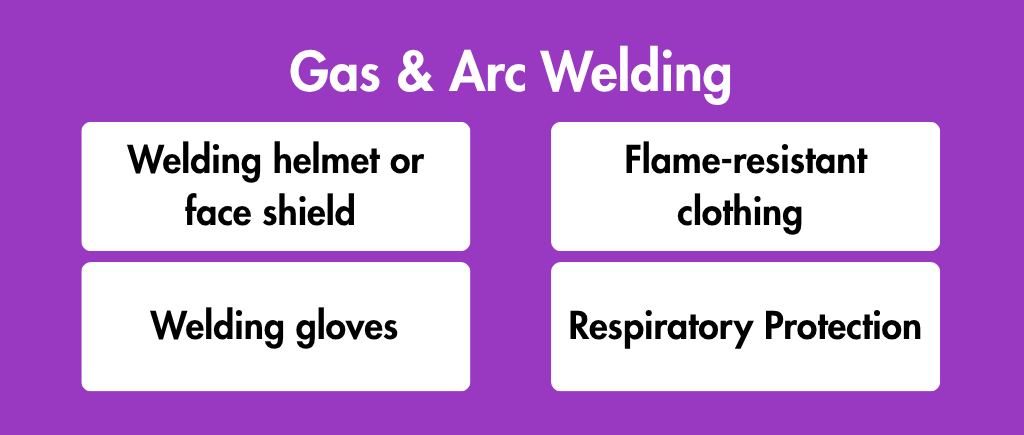
Welding Helmet or Face Shield – protects eyes and face from arc radiation, sparks and flying fragments, with appropriate lens tint for the type of welding
Flame-resistant clothing – Leather jackets and sleeves as well as leather aprons offer UV and heat protection as well as spatter protection
Welding Gloves – Stick welding requires thick leather gloves while thinner leather gloves are suitable for torch work
Respiratory Protection – protection from metal fume and gas inhalation, respirator or adequate breathing equipment
Hearing Protection – protection from noise such as grinding and air arcing, earplugs or earmuffs
Safety shoes – high top boots, insulated, with protection from falling objects and hot molten slag
Important Precautions to Take When Welding
Provide Sufficient Air Circulation
Gas and arc welding produce toxic fumes. Therefore, a sufficiently adequate airflow system must be installed before any welding process can start.
Inspect Tools and Equipment
All cables, clamps, hoses and regulators must be inspected for damage or wear before use. It is a dangerous practice to use broken equipment.
Prevention of Gas Cylinders
Gas cylinders must be kept upright, safely secured and away from heat sources and open flames To avoid hazardous explosions
Make sure equipment is securely grounded
When properly grounded, arcing and welding equipment significantly lowers the risk of electric shock, particularly in high-moisture metal environments.
Clear Work Area Maintanence
The risk of a spark or slag fire increases when clutter and combustible objects are left in the weld zone.
Safe Shutdown
For torches, the fuel should be shut off first before any other safety procedures are taken. For welding machines, the break or end of the shift should be treated as if it were a break, and the machine should be powered down until then.
Conclusion
Whether from a spark from an electrode or a flame from a torch, day in and day out, welding safety equipment and safety disciplines keep welders safe. The hazards of gas and arc welding are well known, and when combined with the right safety equipment and habits, disciplined safety practices, and a complete understanding of gas and arc welding safety, fabrication as a whole can be much safer without hindering overall productivity.