



Overview
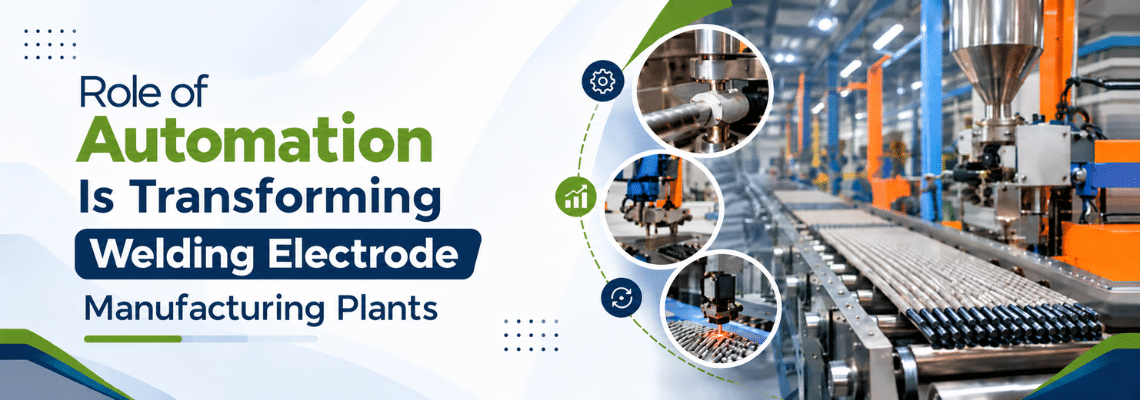
Automation is rapidly improving speed, consistency, and defect rate on production lines. These improvements are occurring on lines that produce welding consumables used in the end-use products in the automotive and shipbuilding industries. Plant managers and industrial engineers are evaluating new production systems to incorporate automated systems to replace manual operations that result in variability and batch-to-batch inconsistency. These same systems allow production to be maintained at peak demand levels.
Why Automation Is Winning on the Shop Floor
Welding electrode manufacturing lines are labor intensive, and operators are responsible for numerous tasks including manually monitoring and adjusting the rate of wire feed, the temperature of the coating ovens, and the drying time of the coating. Consequently, there is significant variability in the characteristics of the welding consumables produced from one shift to the next. Automated systems remove much of the variability associated with manual systems. For plant managers trying to meet the needs of an ever-increasing demand for products while maintaining quality and consistency, the expectations for automation in welding consumable production are also increasing.
Where Automation Is Making the Biggest Difference
Consistency of Coatings and Extrusion
Automated extrusion systems allow for the even application of a coating around the core wire, resulting in more consistent flux application.
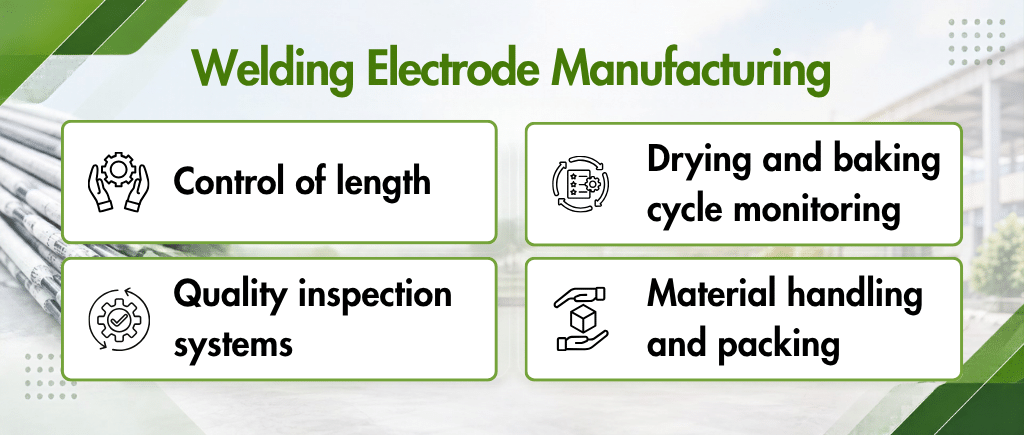
Control of Length
Achieving the correct length of electrodes has traditionally been extremely difficult with manually controlled systems, particularly toward the end of the coiling process. Programmable controls and cutting systems allow electrodes to be trimmed to length with very little variability.
Drying and Baking Cycle Monitoring
Automated controls allow consistent moisture removal which effects arc stability and shelf life.
Quality Inspection Systems
Vision systems and automated measurement provide automated inspection of surface defects and coating cracks.
Material Handling and Packing
Automated systems allow reduced manual material handling which increases throughput and speeds up packing and conveying to storage or shipping.
Benefits Plant Managers Are Seeing
- Greater batch to batch consistency which aids in meeting quality certifications.
- Reduced need for manual labor during peak production.
- Lower rejection rates.
- Improved traceability
What to Consider Before Automating
Not all plants can financially justify a full automated line. Smaller operations may not see the return on the investment in a reasonable time period. Integration and compatibility with other equipment on the line as well as initial investment effect whether an automation system is worthwhile.
Conclusion
Customer demands require consistent and reliable products. Automated systems meet these demands. Plant managers must be mindful of the greatest returns for equipment investments in order to remain competitive.