



Introduction
When first starting out most new manufacture will look at a list of machinery and capacity needed. It soon becomes apparent that the process is a continuous line of machinery and a welding electrode process is an integrated process. The minimum performance of any one piece of machinery will limit the capacity of the plant, and ultimately the quality of electrodes produced.
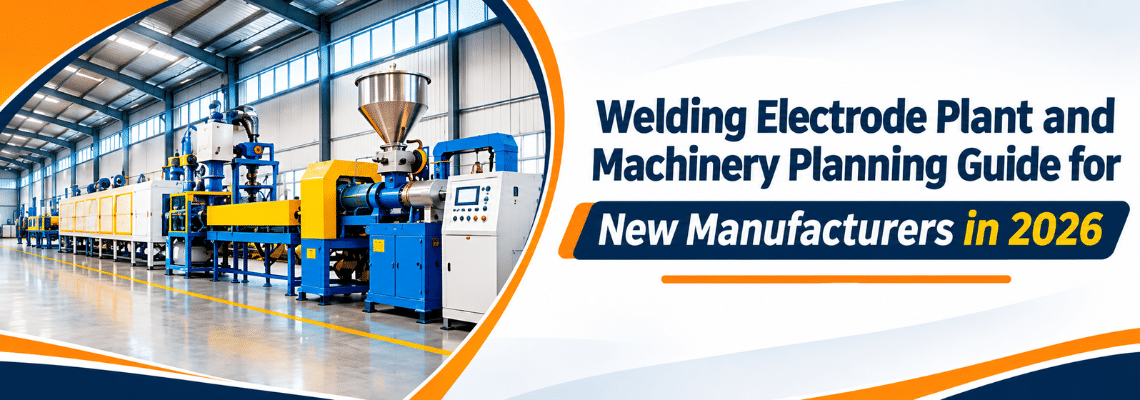
In short, your welding electrode plant should consist of all the necessary machinery to prepare the wire, mix the flux, press slugs, extrude wire, convey, bake and inspect the electrodes. All of these should be part of a line set up based around your required capacity. This booklet will cover what each of the machines do, the ordering of these machines, other considerations, questions to ask and more.
Key Points
Considerations when designing your line are just as important as the machinery itself. The lowest capacity unit will impact the overall output of your plant.
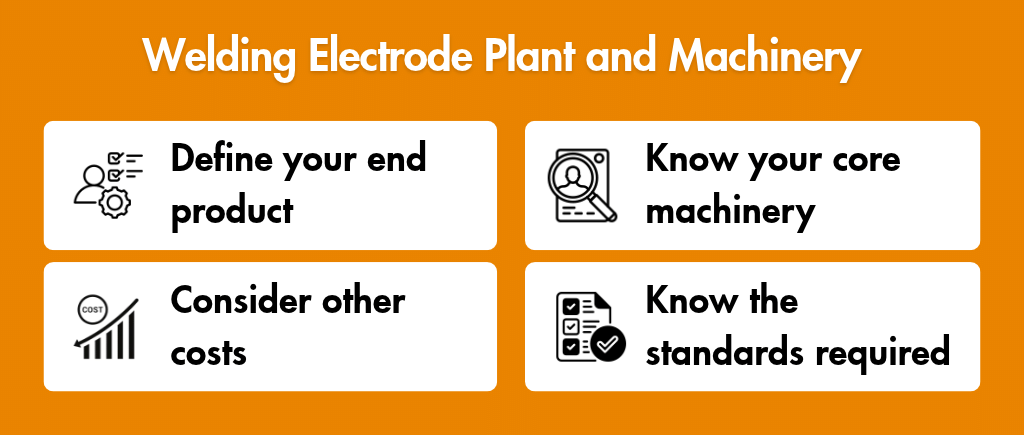
Define your end product. Based on the type of electrode you will produce and the capacity will determine the size of the machinery.
Know your core machinery. You will need a wire straightener/cutter, dry and wet mixers, slug press, extruder with wire feeder, conveying system and baking oven.
Consider other costs. There are several other costs to consider, such as raw materials, utilities, testing equipment, installation and training.
Know the standards required. Find out what standards are required for your product (BIS or customer specifications).
Vendor considerations. After sales, service, spares and field engineer support are very important in the first year of operation.
Welding Electrode Plant & Machinery Guide for New Manufacture – 2026
What is a welding electrode plant & Machinery is a facility that manufactures welding electrodes. These electrodes are created using a steel core wire and powdered flux mixture. Several processes are involved within the facility to produce the electrodes; wire preparation, flux preparation, extrusion coating, baking and quality control.
The core components of a basic unit would be a wire straightener/cutter, dry and wet mixers, briquette press, extruder, wire feeder, conveyor and baking oven. Other processes such as printing, packing and testing are built around the core.
How are welding electrodes produced?
Wire preparation – The steel core is cut to the required length using a wire straightener/cutter. The wire should be cut to within the required tolerances.
Dry mixing – A homogeneous mixture of the powdered flux is created.
Wet mixing – Binder is added to the dry mixture to create a paste.
Slug pressing – The pasty mixture is then formed into slugs of a defined shape and size to fit the extruder.
Extrusion – The flux is applied to the steel core wire using the extruder. The steel core wire is supplied using a wire feeder.
Conveying & finishing – The coated electrodes are conveyed along the line and then finished off by cleaning the ends and printing.
Baking – The electrodes are now dried and baked. Temperature and baking time will impact the performance.
jinlongweldingelectrode
Inspection & packing – The electrodes are then inspected to ensure they meet the required dimensions, concentricity and moisture levels. The finished electrodes are then packed.
Machinery Required
Core machinery. Below is a list of the core machinery required, this matches what is available on Logos Welds website.
| Process | Machinery | Purpose |
| Wire Preparation | Wire Straightener/Cutter | Straightens wire coils and cuts them to length |
| Wire Preparation (if required) | Wire Wash, Clean & Strip | Cleans core wire and removes rejected coating |
| Flux Preparation | Dry Mixer/Double Cone Blender | Mixes dry flux powders |
| Flux Preparation | Wet Mixer | Mixes flux with binder to create paste |
| Flux Preparation | Flux Sieve | Removes lumps and maintains particle size |
| Coating | Briquette Press (for Slugs) | Compacts the flux paste |
| Coating | Extruder (Horizontal or Vertical) & Wire Feeder | Applies flux coating to core wire |
| Handling | Conveyor with VFD | Moves coated electrodes along the production line |
| Finishing | Online Printer | Prints identification details |
| Drying | Low and High Temperature Baking Oven | Dries and bakes electrodes |
| Recovery | Wet Flux Recovery | Recovers material from rejected extruded flux |
| Packing | Shrink Wrap | Packs finished electrodes |
| Quality | Microscope & Profile Projector | Checks coating dimensions and concentricity |
Capacity & Layout Considerations
Product Design – Decide what types and diameters of electrodes you wish to produce initially. Produce a smaller number of electrode types to keep the tooling and quality control simple.
Realistic Output – Decide how much you would realistically produce per day. This should be based on your actual demand.
Bottleneck – The extruder and oven will dictate the true capacity of your process. Decide what capacity you need and size these units accordingly. Size the rest around these units.
Flow – Ensure your equipment flows in the correct order. Ideally you should have all your raw material stores at one end of the process and finished goods at the other.
Future Expansion – Ensure you have capacity for extra equipment in the future.
Raw Materials
Before receiving the machinery, consider:
Core wire diameters
Flux (Minerals, Ferroalloys & Powders)
Binder – generally Silicates
Standards
Indian electrodes are generally tested against BIS standards. For example IS 814 specifies requirements, dimensions & classification for electrodes for welding carbon and carbon manganese steels. Export buyers may require international classification.
infralens
Recommendation – Ensure you confirm standards and testing with BIS.
Other Costs
Create a comprehensive list of investments with a qualified expert. This will typically include:
Machinery & Installation
Factory Space, Foundations & Initial Utilities Cost
Raw materials
Testing & Measuring Equipment
Licences, Registrations & Certifications
Initial working capital for first few months
Training for employees
Old project profiles exist however the costs are outdated. Build your estimates from recent quotes.
Welding Electrode Machine Manufacturers
Considerations:
Single or full line manufacturers? Sometimes single machine manufacturers can struggle to integrate the sub systems.
Can they design for your range? Look for in-house design and fabrication.
Do they carry out lab testing before dispatch? An experienced vendor will be able to run trial runs or provide sample testing reports.
Who will install the machine? An experienced vendor will be able to train staff on site, reducing start up time
Post sales support & spares? Timely post sales support is vital for a new plant.
Can you contact references? References help to build trust.
Logos Weld Products (Coimbatore) state they have a (CAD) Computer Aided Design section and Material Testing Lab. They supply machines throughout India and globally. During your search for welding electrode machine manufacturers in Coimbatore, visiting a factory can give you first hand insight into their fabrication capabilities
Examples and Insights
Example 1: In a start up there is a large extruder and small oven. This causes a bottleneck because of buildup on the coated electrode. This shows that if one part of the line is not matched up with the rest it can cause a bottleneck within the line. (This is not an actual case study.)
Example 2: Start small and expand. An MSME owner decided to start with one type of electrode with two diameters. They planned ahead and had space for another line. This made it easier to identify and fix quality issues. It was easy to expand the line. (This is not an actual case study.)
Example 3: No reclamation. If there is no reclamation process for the flux 100% of the extruded electrodes are wasted. If you have a reclamation process you will save material, reduce costs and increase throughput. (This is not an actual case study.)
Considerations Before Ordering
Ensure the customer has specified the product they want to produce, diameter and daily requirement in writing.
Ask for a breakdown of the machinery and their power ratings.
Confirm trial, installation, commissioning & training.
Make sure you have access, to parts and know how long it will take to get them.
Make sure you fully understand the materials that are involved.
FAQ
1. What machinery is required?
Essential machinery would be a wire straightener/cutter, dry mixer, wet mixer, slug press, extruder with wire feeder, conveyor & oven.
2. How is a welding rod manufactured?
Wire is cut and straightened, flux powders dry and wet blended with each other to make paste. Paste is pressed into slugs. Wire is coated using the extruder. Electrodes are transported, baked, checked and packed.
3. What is a slug press?
Slug press, also known as briquetting press compresses wet flux paste into slugs. These cylindrical slugs are then fed into the extruder.
4. Why are welding electrodes baked?
Baking removes moisture. Hardens the coating. I observe that drying temperature and drying time strongly affect electrode performance and electrode performance is critical so the oven becomes a machine.
5. Do I need BIS certification to sell welding electrodes in India?
The requirements will depend on product and customer. Please check latest BIS regulations. IS 814 is an important Indian standard relating to covered electrodes for manual metal arc welding of carbon and carbon manganese steels.
6. How do I determine my capacity?
Initially determine your confirmed demand and product range. Firstly size your extruder and oven as these will generally define your true output. Ensure you have space for your process and utilities to expand in the future.
7. Can the plant produce flux cored wire?
No, flux cored wire would require a separate line to produce the filling and forming process. Decide early if you require both wires.
8. What should I ask a welding electrode machine manufacturer?
Are they a full line manufacturer? What is their design & testing process? What support do they provide during installation & training? What spares do they provide? What references do they have?
Conclusion & CTA
Ensure you have a clear understanding of what products and capacity you require. Decide what machinery you need to prepare your welding electrodes, mix your flux, extrude & bake, and inspect. Ensure you have utilities and testing. Confirm training, equipment & standards.