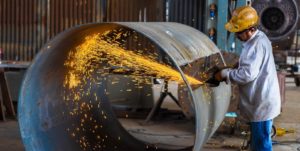




Electric welding is one of the most common methods for joining metals in wide spread use today. Three are essential electric components of welding a power source, an electrode, and a controlled electric circuit, which, when completed, generates sufficient heat to melt and join metals. The critical component in the electric welding process is the welding electrode, which connects electric energy to the weld joint. Knowledge of electric welding components helps manufacturers, fabricators, and operators select the proper tools and materials necessary to obtain good welds every time.
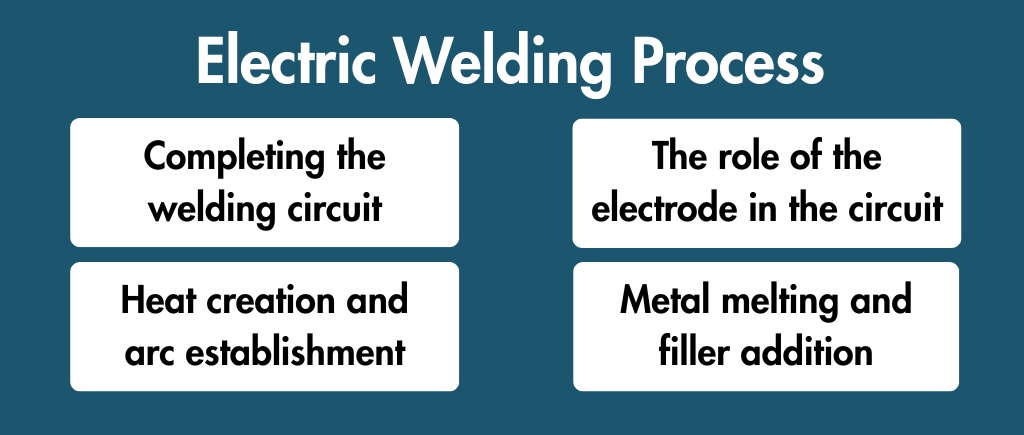
The process of electric welding
- Completing the Welding Circuit:
Before an arc is struck, a complete electrical circuit has to be made from the power source to the electrode holder to the workpiece. A ground clamp connects the workpiece being welded to the machine, completing the circuit that the current has to flow through. Without a stable circuit and proper grounding, no arc can form, and the weld will be of poor quality. - The Role of the Electrode in the Circuit:
The electrode is by far the most important consumable component in the entire setup. It carries current to the workpiece and, in most methods of welding, it also supplies filler metal and therefore, the joint is formed. To protect the molten metal from atmospheric contamination, the electrode’s coating, or core, often contains fluxing agents. The quality of raw materials will directly affect the quality and strength of the weld. - Heat Creation and Arc Establishment:
While the main electrode makes brief contact with the workpiece, and the main electrode is then withdrawn, a gap across which electric current may flow is established. The temperature of a fully developed electric arc is estimated to be in excess of 3,000° C. With this temperature, the base metal and the electrode melt almost instantaneously. The ability to control arc length, as well as the ability to control electric current, is what differentiates a quality weld from a weld that is weak and/or porous. - Metal Melting and Filler Addition:
While the arc is allowed to establish itself, metal in the form of large droplets from the electrode is deposited in the joint and is mixed with the base metal that is in the melted state. This fusion zone ultimately establishes the joint. The rate at which filler material is deposited is a function of the diameter of the electrode, the level of current that is set on the welding machine, and the welding operator’s technique. - Cooling, Solidifying, and Joint Forming:
As soon as the arc is allowed to move or is interrupted, the molten metal begins to cool and solidify. Any flux that is used forms a slag layer that covers the weld bead. This protects the weld bead during the cooling stage. A welding bead cools at an optimum rate to prevent cracking and to strengthen the joint to the required mechanical level.
The quality and type of electrical welding define, the quality of the result during the entire process from setting up the circuit to the final cooling of the weld. Well established electric welding processes give manufacturers the ability to produce large quantities of joints that are free from defects with a high level of confidence. The companies that are situated to offer consistent results based on the varied application requirements are the companies that are able to effectively control their manufacturing process by investing in the construction of precision welding electrode fabrication plants and using validated raw materials in the plants.