


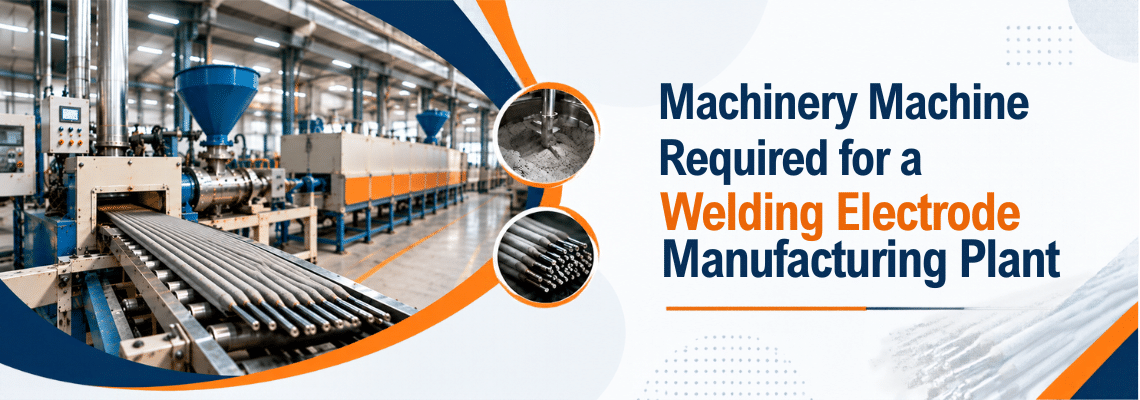
Any interested party interested in manufacturing coated electrodes must become familiar with the equipment utilized in the process prior to approaching machinery suppliers. A production line is a series of connected machines, and the final output is limited by the weakest link in the chain. The intent of this guide is to list the equipment in order of production process so an equipment list and an associated budget may be developed.
Wire Preparation Equipment
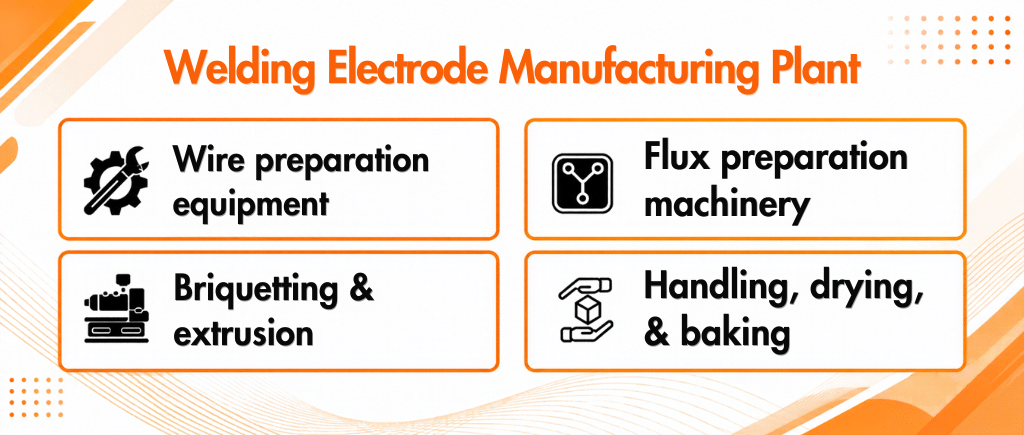
The starting raw material is core wire in the form of a coil. The first step in production is the removal of scale, oil and dirt from the surface of the wire by means of washing and cleaning machines respectively. The next step is straightening and cutting the coil to the required length. The straightening and cutting machine should be set accurately in order to ensure the rods are the same length, which in turn ensures uniformity at every subsequent stage of production.
Flux Preparation Machinery
Flux is a combination of minerals, ferro alloys and binders, and its quality determines the electrode behavior during use. A dry mixer or double cone blender is used to combine the powders evenly. Lumps and oversize particles are removed by a flux sieving machine before blending. A liquid binder is added by a wet mixer to form a uniform paste. For a welding electrode manufacturing plant, this process determines the success for each batch, since an uneven mix cannot be corrected in the latter batches.
Briquetting and Extrusion
Using a briquetting press, or slug press, slugs of the wet flux are formed. Slugs are fed into an extruder which pushes the flux through a die and creates a smooth, continuous surface on the strand. Vertical and horizontal extruders are available, and a wire feeder with variable frequency drive can help control the wire through the die. The concentricity of the coating determines how well the coating adheres to the strand, and because of this, the extruder machine is the most closely examined piece of equipment by buyers.
Handling, Drying, and Baking
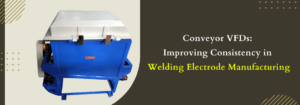
After the coating process, the rods are conveyed on a continuously variable speed conveyor to an oven. The oven gradually evaporates the moisture from the coating. This process helps the coating set, and it is of equal importance as the extruder process to prevent flaws in the coating.
Finishing and Marking
After the coating process and before the rods leave the facility, the end of the rods may go through a stripping process or be marked with a printing head. A wet flux reclamation machine may be used to help recover flux lost during the extrusion process and reduce loss of valuable flux.
Inspection and Packing
Rods approved by quality control are packed in a shrink-wrapped bundle. A microscope and a profile projector are essential to help verify the coating meets requirements.
Finding the Right Supplier
Buyers should confirm if the supplier can deliver matched capacities at all stages, provide installation support, and/or supply raw materials or advice on flux formulations. Logos Weld Products, located in Coimbatore, manufactures machines described above, which includes a flux cored wire machine, and states that it designs equipment to clients’ needs, provides erection and service support. Seek machine specifications, output capacity per shift and references before placing order.
Final Thoughts
Dedicated and balanced equipment, along with a reliable supplier who offers support through the entire installation process, forms the basis of a successful production line. Create an equipment list, matched to each other capacity wise, from the start, and buy inspection aids. This saves costs, time and effort later when the production line is in use.