



Overview
Working with structural steel provides very little margin for error. Each beam, column, and connection relies on a particular weld that was designed and tested before the first arc was laid. Before this design and documentation takes place in the form of a written specification that covers design of joints and choice of electrodes, the prime differentiator between a code compliant and costly rework structure is getting the right selection. For a welding engineer and fabrication contractor, understanding how to choose and apply specification correctly is as critical as the welding process , for even the finest choice of electrode or machining equipment cannot compensate for an incorrectly matched procedure.
Welding Procedure Specification
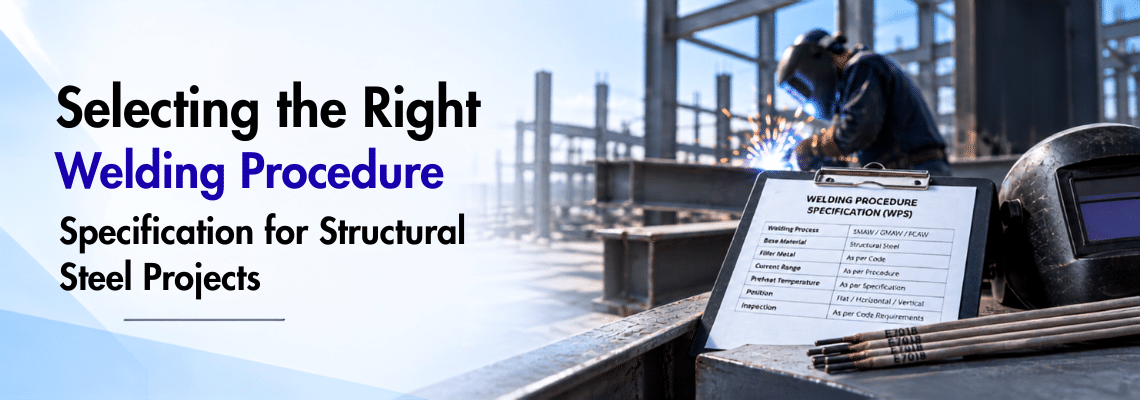
A Welding Procedure Specification (WPS) is a formal document that specifies the requirements for welding a prescribed joint. A WPS describes how a joint is to be welded and components such as the welding process, classification of the welding electrodes, the range of welding current, joint type, and the required levels of preheat. On the AWS D1.1 structural steel code, WPS documents generally fall into two categories
Prequalified WPS – uses joint designs, processes (SMAW, SAW, GMAW, FCAW), and base metals that have been qualified by the Code, and thus do not require destructive testing
Qualified WPS – used when the project falls outside the prequalified limit, requiring the construction of a Procedure Qualification Record (PQR) and mechanical testing prior to its use
The choice between the two is typically determined by the project’s scope, the materials used, and whether the suggested design incorporates joint configurations that are not listed in the standards code tables.
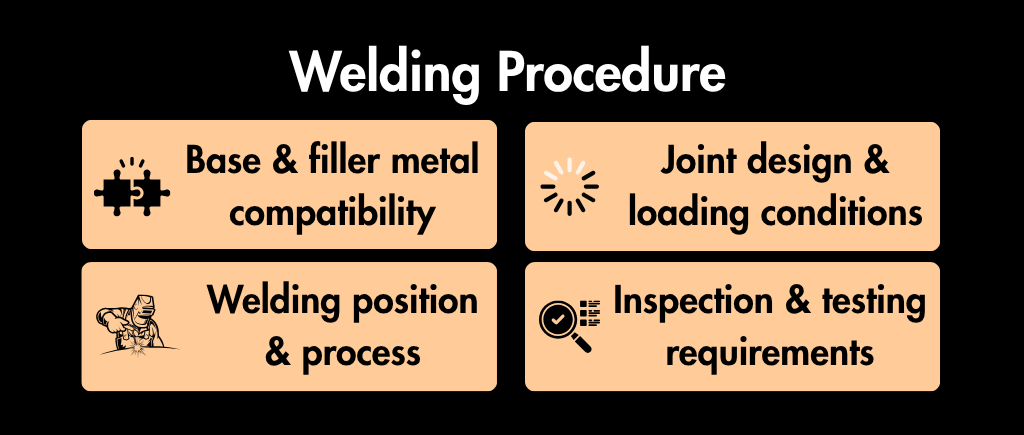
Key Considerations When Choosing a Procedure
Base and Filler Metal Compatibility
Depending on the steel grade being joined, different filler metals and electrode classes may be needed and, when used together, may cause the welds to be strong but less tough.
Joint Design and Loading Conditions
Theacceptance criteria and potential need for the notch toughness of a joining procedure is based on the type of loading that the joint will be subject to.
Welding Position and Process
The welding process is dependent on the welding position, be it flat, horizontal, vertical or overhead. Each requires a different range of qualification for fillet and groove welds.
Preheat and Interpass Temperature Range
Different steel grades and section thicknesses require different levels of control for preheat and interpass temperatures in order to avoid cracking.
Inspection and Testing Requirements
Procurement of a joining procedure is necessary for projects where charpy V-notch and non-destructive examinations or inspections may be required.
Practical Importance in Fabrication Projects
- If a procedure is badly matched then the work may require additional fabrication and an inspection of the work may fail.
- Restrictions on code allow the use of prequalified procedures, and lead time is reduced.
- Code requirements on the design of a joining procedure and selection of the appropriate electrode dramatically affects the performance of the fabricated joint.
- Inconsistent paperwork or documentation during an audit are the most common reasons for rejected welds.
- Due to their importance in a joining procedure, correctly rated electrodes are just as important as the accompanying documentation.
Conclusion
In the absence of appropriate procedure selection, it is very difficult to understand how structural steel joints will maintain integrity over many years of service under design loads. The selection of welding procedures for welding engineers and fabrication contractors is not a documentation exercise. It requires the same emphasis as the selection of material and the welders. Code-compliant and efficient construction of a project from the first weld to the last is the goal for both.