


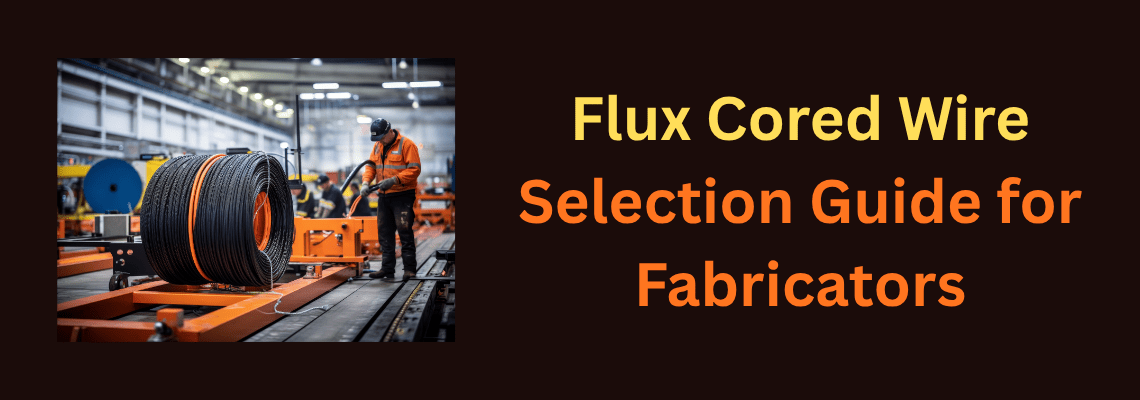
Cored wire welding uses a tubular electrode filled with flux material instead of a solid metal core. Cored wire welding has a hollow electrode that contains a flux substance rather than a solid metal core. As the wire melts, the flux forms a shielding action that protects the weld pool from contamination. This design allows higher deposition rates and better control over weld penetration compared to many solid wire processes, which is why so many fabrication shops rely on it for structural and heavy plate work.
The tubular construction also makes the wire more forgiving on outdoor sites or areas with wind, since some variants do not need external shielding gas at all. This flexibility is one reason plant owners often stock more than one variant, allowing crews to switch between shop and field work without overhauling their entire welding setup.
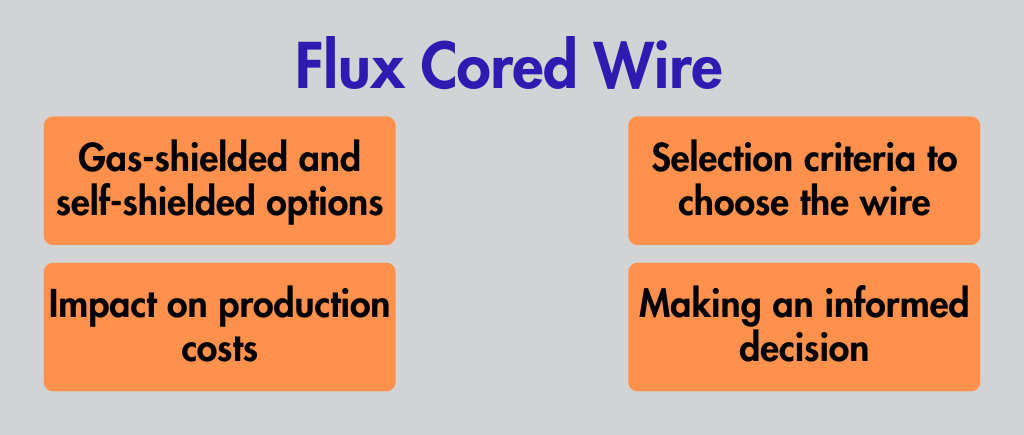
Gas-Shielded and Self-Shielded Options
There are two broad categories fabricators typically choose between. Gas-shielded variants rely on an external shielding gas, usually carbon dioxide or a mixed gas, to protect the weld pool. These produce clean welds with good mechanical properties and are common in shop environments with stable airflow.
Self-shielded variants generate their own protective gas from the flux core itself. They are suited to outdoor construction, pipelines, and site work where gas cylinders are impractical. Each type has trade-offs in deposition rate, spatter level, and appearance, so the choice usually comes down to the working environment and the finish required.
Selection Criteria to choose the wire
Procurement decisions should start with the base material and thickness being welded. Carbon steel, low alloy steel, and stainless applications each call for a different wire chemistry. Plant teams should also consider the welding position, since some wires perform well only in flat and horizontal positions while others are rated for all positional work.
Impact on Production Costs
Wire selection has a direct effect on total welding cost, not just the price per spool. Higher deposition wires reduce arc time per joint, which lowers labour cost even if the material itself costs more. Spatter levels influence post weld cleanup time, and wires with lower spatter can shorten finishing schedules considerably.
Procurement managers evaluating capex should weigh wire cost alongside consumable life, cylinder logistics for gas-shielded types, and downtime associated with feeder maintenance.
Quality and Certification Considerations
Fabrication plants working on structural, pressure vessel, or code governed projects need wires that meet recognized classification standards. Checking certificates, mechanical property data sheets, and diffusible hydrogen ratings helps confirm that a wire suits the intended application before large volume purchasing begins.
Consistent quality between batches also matters for plants running continuous production lines, since variation in wire diameter or flux fill can affect feeding stability and arc performance over long runs.
Making an Informed Decision
Selecting the right wire is rarely about price. It involves matching material type, position, equipment, and finish requirements to the job. Fabricators who evaluate these factors carefully and consistently tend to see steadier output and fewer quality issues on the shop floor.
For plants planning new welding lines or expanding existing capacity, working through these considerations early helps avoid costly changes later. A well-matched flux cored wire supports both production efficiency and consistent weld quality across a wide range of fabrication work.